
• HOME
  • Blog
  • 2026
  • Safety best practices for operating order picker forklifts

Safety best practices for operating order picker forklifts

Operator licensing and authorisation

In Australia, an order picker forklift is classified as a forklift under relevant workplace health and safety regulations, and operators are required to hold an LO High Risk Work Licence (HRWL). The licence requirement applies regardless of the lift height or the specific model being operated.


Beyond the formal licence requirement, site-specific authorisation is standard practice. Operators should be inducted on the specific machine model, the racking configuration, the site's traffic management rules, and the emergency procedures for the facility before beginning independent operation.


Pre-start checks specific to order pickers

Pre-start checks on an order picker forklift cover the same core components as any electric machine, with additional attention to the elevated platform systems:


    • Platform safety rails and gates. Confirm that all restraint rails are in position and secure. Gates should latch positively and not open under light contact.


    • Operator restraint. Where the machine is fitted with a harness anchor point, confirm the anchorage is secure and the harness is in serviceable condition. The restraint is the primary fall protection at height.


    • Lift and lower function. Test lift and lower through a short cycle before loading. Confirm that the platform responds smoothly and holds position without drift when the control is neutral.


    • Travel function. Confirm that the machine travels and steers correctly at ground level before the operator ascends to the pick height.


    • Platform surfaces. Check for debris, liquids, or any obstruction on the platform floor that could create a slip or trip hazard at height.


Operating at height: the critical practices

The elevated platform of an order picker forklift concentrates several risk factors in a small space. Safe practice at height requires specific discipline:


  • Maintain three points of contact when reaching. Operators reaching into racking bays should keep at least one hand in contact with a fixed surface. Reaching beyond the platform perimeter with both hands unsupported creates a fall risk.


  • Never exceed platform edge loading. Loading the platform at its perimeter rather than centrally shifts the load distribution and affects the machine's stability. Loads being placed on the platform should be positioned in the designated load area.


  • Move at controlled speed with the platform elevated. The order picker forklift travel speed will be reduced proportionally to the working height. At high pick positions, even a moderate travel speed creates a tipping risk on any floor irregularity.


  • Keep loads within platform dimensions. Oversized items that overhang the platform edges create handling difficulty and increase the risk of the load striking racking during travel.


Pedestrian and floor crew safety


In active pick operations, floor crew, pickers on foot, and other machine operators share the aisle with the order picker forklift. The primary risk is the overhead load and the platform itself, which floor-level personnel may not always be aware of.


Effective controls:

  • Establish pedestrian exclusion zones. Pedestrians should be kept separated from order pickers by specific fencing, if the order picker is able to travel at height, to prevent any interaction between the machine and pedestrians unless the units are fitted with a pedestrian detection system which will control the movement of the order picker if pedestrians are within a specific perimeter.


  • Use audible warnings when lowering the platform. A warning before the platform descends alerts anyone below to the movement.


  • Apply the site's traffic management rules consistently. An order picker forklift operating in a live picking operation shares the aisle with people and equipment in ways that require consistent application of right-of-way and speed rules.


Fatigue management on the elevated platform


Elevated platform work over a full shift is physically and cognitively demanding. The confined space, the postural requirements of reaching into racking bays repeatedly, and the sustained concentration required for accurate picking all contribute to fatigue that accumulates over the shift.


Scheduled breaks with operators fully off the platform are an operational standard, not an option. Pushing through fatigue at height increases the risk of reach errors, posture-related strain injuries, and the reduced situational awareness that precedes most elevated platform incidents.


Why choose Toyota Material Handling?


Toyota Material Handling Australia provides order picker forklift equipment and support for warehouse and distribution operations across Australia.


  • Product range: Electric order picker forklifts in configurations suited to standard and high-bay racking environments.


  • Operator training: TMHA co-ordinated programmes cover order picker licensing, safe elevated platform operation, and site-specific induction support.


  • Service: Toyota-trained technicians and Genuine Toyota Parts to keep equipment in safe, reliable operating condition.


Elevated platform, elevated discipline


Safe operation of an order picker forklift starts with the right licence and authorisation, and is maintained through consistent application of the specific practices elevated platform work requires. The consequences of a lapse at height are more severe than equivalent lapses at ground level, which is why the discipline needs to be applied on every shift, not just during audits and observations.


Contact Toyota Material Handling Australia to discuss order picker equipment, training, or service requirements.
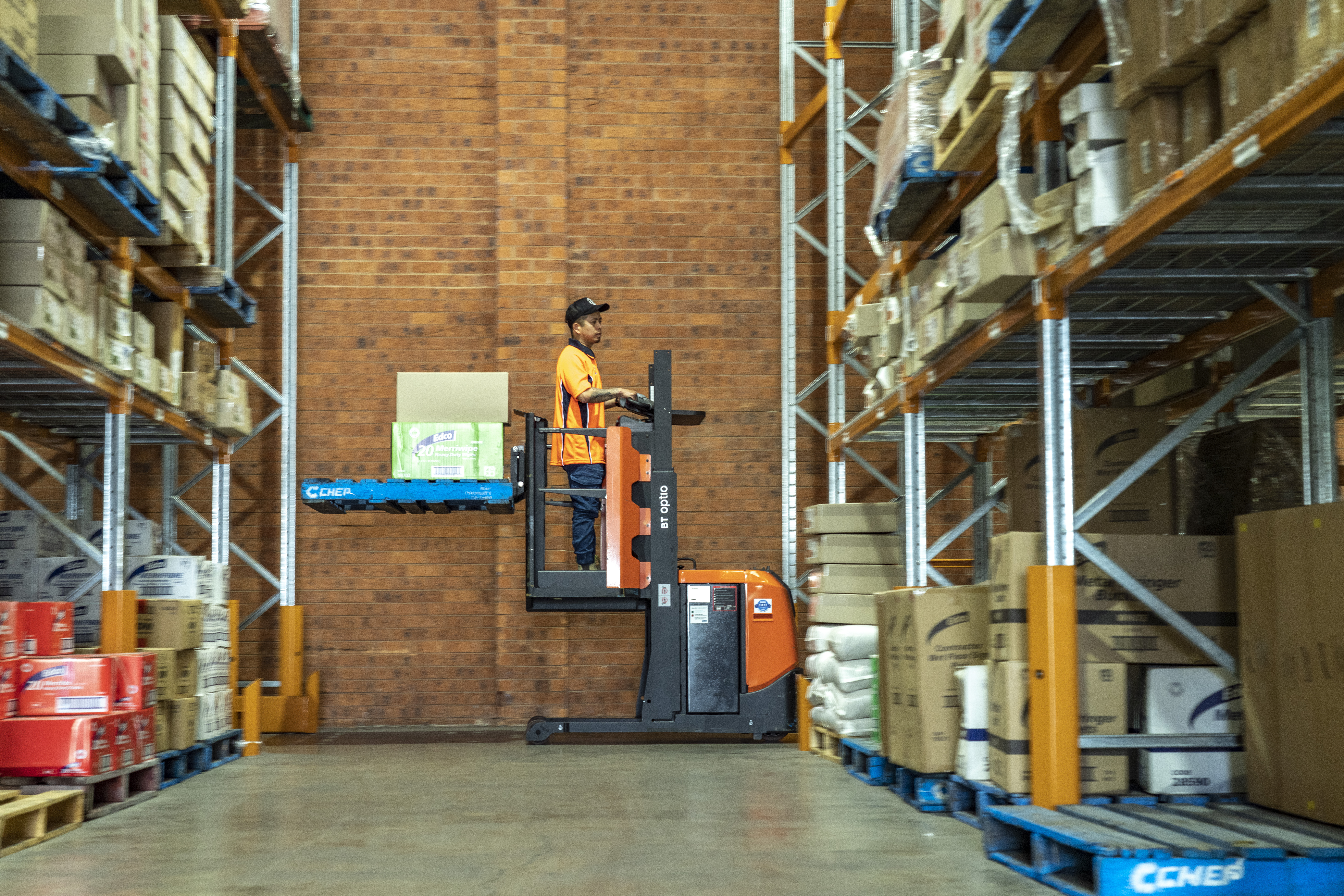


Safe operation of an order picker forklift starts with the right licence and authorisation and is maintained through consistent application of safe practices at height.

x

Subscribe to our newsletter