How manual pallet jacks work
A manual pallet jack, sometimes called a pump jack, uses a hydraulic mechanism operated by hand to lift the forks off the ground. From there, the operator pushes, pulls, and steers the load.
Manual units are straightforward, durable, and low-maintenance. They require no charging infrastructure and no electrical components. For operations where loads are relatively light, distances are short, and movement frequency is low, a manual pallet jack remains a practical and cost-effective tool. Operators can use them without specialised training, and maintenance is limited to basic inspection and occasional hydraulic servicing.
Best for: Low-volume storerooms, retail back-of-house, occasional load movement across short distances, and operations where simplicity and low acquisition cost are priorities.
The case for electric pallet jacks
Electric pallet jacks power the lift and, meaning the machine moves under its own drive rather than relying on the operator for propulsion. The operator steers and controls speed via the tiller, but the physical effort required to move loads, especially heavy loads over longer distances, is substantially reduced.
The productivity gap between manual and electric becomes significant as load weight, travel distance, and movement frequency increase. An operator moving full pallets from a receiving dock to a staging area fifty metres away, many times per shift, experiences a fundamentally different fatigue and throughput profile on an electric unit than on a manual one.
Ergonomics and operator fatigue
Operator fatigue in high-frequency manual pallet handling operations is a real operational cost, not just a welfare consideration. The physical demand of lifting and pulling heavy loads across a full shift contributes to musculoskeletal strain, reduced afternoon throughput, increased injury risk, and the workers' compensation and absenteeism costs that follow.
Electric pallet jacks remove the propulsion load from the operator. Under Australian workplace health and safety principles, reducing manual handling exposure is both a compliance priority and a productivity investment. The sustained output difference between a fatigued manual operator and an operator on electric becomes measurable over a full shift.
Productivity and throughput
Where a single operator moves significant pallet volumes per shift, the cycle time advantage of electric compounds across hundreds of movements. Powered travel is faster and more consistent than manual travel. Operators arrive at each new task in better condition than they would after the equivalent manual effort. In high-throughput distribution and 3PL environments, this is not a marginal gain.
The key variables for the decision
Distance per cycle. Movement of a few metres between adjacent positions does not justify electric. Movement across a full warehouse floor, between loading docks, or through extended aisles does.
Cycle frequency. The number of movements per shift matters as much as the distance. Businesses running ten pallet movements per day have a different equation from those running a hundred.
Upfront cost versus operating return. Manual units carry a lower acquisition cost. For operations at low volume and short distances, the productivity and ergonomic case for electric pallet jacks may not justify the price gap. This trade-off is real, and the right answer for a small storeroom may genuinely be a manual unit.
Charging and maintenance for electric units
Electric pallet jacks require a charging infrastructure, typically overnight charging between shifts for standard operations. In multi-shift environments, charging window planning is part of the operational implementation. Battery technology has advanced, with lithium-ion options offering faster charge times and longer cycle lives compared to traditional lead-acid units.
Maintenance on electric units is more involved than on manual. Batteries, electronics, and traction components require periodic servicing. A planned maintenance program, including battery health monitoring, protects the investment and maintains reliability across the fleet.
Why choose Toyota Material Handling?
Toyota Material Handling Australia provides pallet handling equipment, service, and support across the full range of operational requirements.
Matching the machine to the operation
The right choice between manual and electric comes down to throughput, travel distance, and the physical demand on operators across a full shift. Manual units serve low-volume, short-distance applications well. Electric pallet jacks deliver a clear return where volume, distance, and operator welfare are genuine operational considerations.
To discuss the right pallet handling configuration for your business, contact the Toyota Material Handling Australia team.
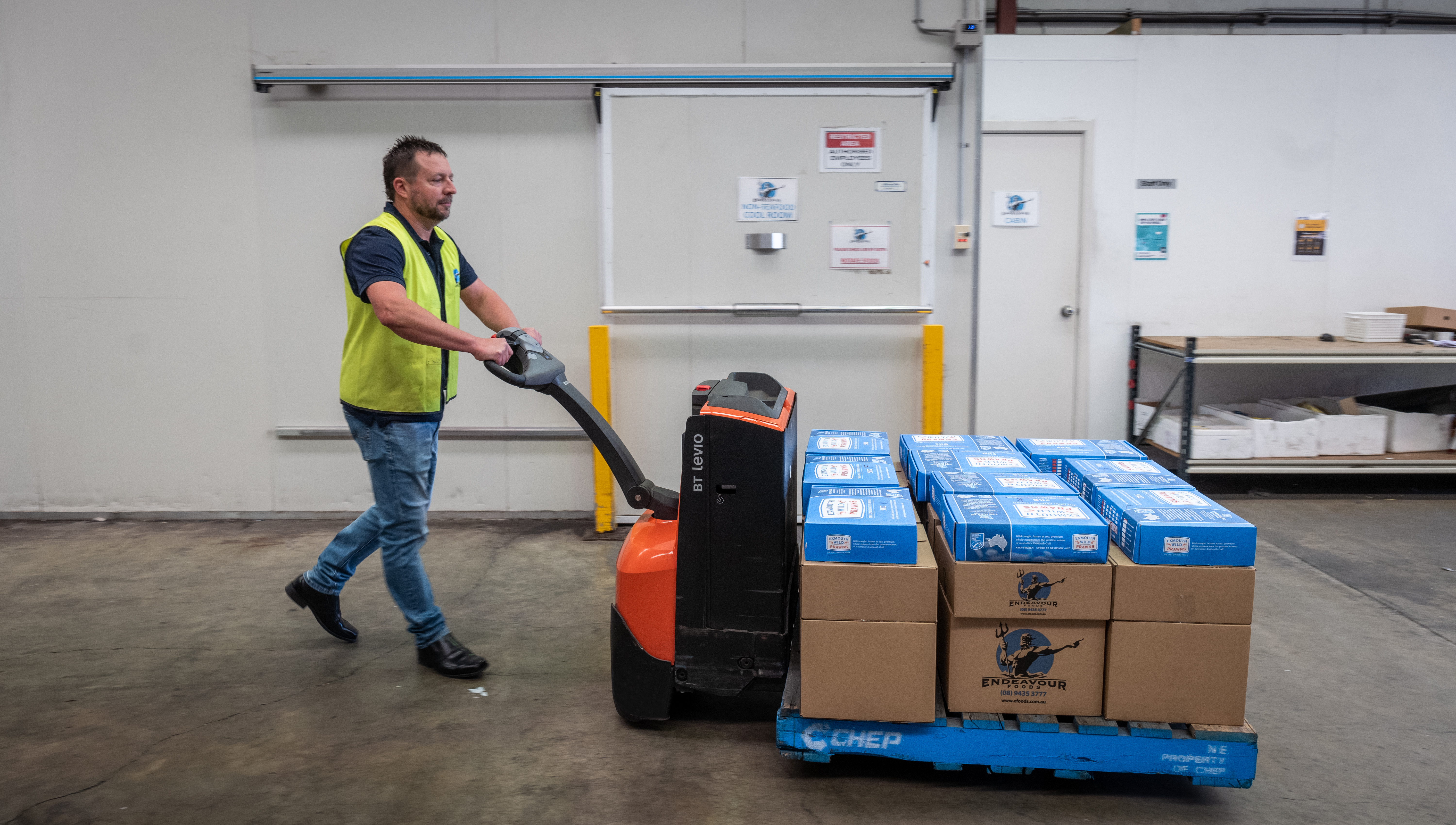
Choosing between a manual and electric pallet jack comes down to your operation’s load volume, travel distance, and the need to balance productivity, operator comfort, and cost.